

Evidence for a screwworm-free hemisphere.
We produce and commission research that gives governments, producers, and partners the evidence they need to plan and scale control and eradication programs.
The burden of screwworm. How many animals are affected, farmed and wild.
Economic impact. What screwworm costs producers and national economies, and what erradication could return.
New technologies and regulatory pathways. Independent assessment of emerging tools and what it takes to bring them into use.

Estimating the number of wild animals affected by screwworm in South America
A model-based estimate of New World screwworm (Cochliomyia hominivorax) infestation and mortality in wild mammals in South America
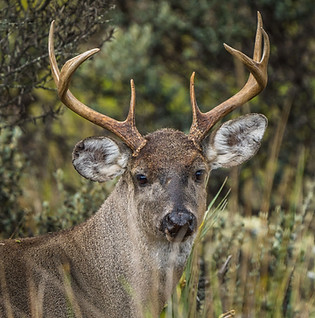
We commissioned the first study estimating the number of wild animals affected by the New World Screwworm (Cochliomyia hominivorax) in South America. Quantifying this impact is essential because unmanaged wild animals can act as a reservoir, contributing to farm reinfestation and complicating regional eradication programs. This report is a tool that can be used to structure regional surveillance and eradication planning. The full report, methodological documentation, and raw data can be accessed here.
Summary of results
-
Wild reservoir: the primary model projects ~37 million distinct wild mammals infested annually (~38 million total infestation events) across South America. Expert-adjusted scenarios accounting for survey gaps estimate up to 155 million infested individuals.
-
Attributable mortality: NWS myiasis causes ~13 million annual wild mammal deaths (mean 35% mortality rate in untreated wild animals), with expert-adjusted estimates reaching 55 million annual deaths.
-
Geographic concentration:
-
Brazil is the largest reservoir, contributing to 44% of the continental total (~16M infested; ~5.7M deaths/year).
-
Argentina ranks second (~7M infested/year, 2.5M deaths).
-
Colombia (~30M infested/year, 1M deaths each) represents a high-risk corridor bordering Central American suppression zones.
-
-
Taxonomic drivers: Species with high behavioral wound rates face severe individual annual risk: brocket deer (8–10%), peccaries (4–8%), giant anteaters (7%), and capybaras (6%).

Strategic importance
-
Wild reservoirs as farm infestation drivers: unmanaged wild mammal populations can maintain a high baseline fly density, creating reinfestation pressure for commercial cattle, swine, and sheep operations that hampers control efforts. Wild host biomass and distribution must be integrated directly into surveillance and Sterile Insect Technique (SIT) release ratios.
-
Optimizing biosecurity & surveillance: provides biosecurity agencies and governments with a spatial roadmap to structure field monitoring (e.g., camera-trap wound surveillance) on high-burden biomes (Gran Chaco, Cerrado, Pampas) and key border areas like the Colombia–Panama gap.
-
Protecting biodiversity & vulnerable species: screwworms act as an additive mortality factor for endangered species such as the Chacoan peccary (~234 annual deaths out of ~9,500 remaining) and the Mountain tapir, where extra mortality can threaten local population stability.
Suggested citation: Screwworm Free Future (2026). A Model-Based Estimate of New World Screwworm (Cochliomyia Hominivorax) Infestation and Mortality in Wild Mammals in South America. https://doi.org/10.5281/zenodo.21759599

Coming soon
More research is on the way, including an analysis of screwworm's economic costs across the Americas and a comparison of the effectiveness of different control and eradication technologies.